E2E Testing Methods
End-to-end (E2E) testing validates the complete workflow of an application, ensuring all integrated components work together as expected. In modern DevOps, E2E tests are critical for cloud-native, microservices, and distributed systems across AWS, Azure, GCP, and on-prem environments.
Horizontal Test
A horizontal E2E test covers a business process or data flow that spans multiple applications or services. This is common in data pipelines, ETL workflows, or event-driven architectures.
Example:
- Data is ingested from multiple sources (e.g., AWS S3, Azure Event Hub, GCP Pub/Sub)
- Flows through a gateway API, transformation service, validation, and storage (e.g., data lake)
- E2E test verifies the data is correctly processed and stored, regardless of the source
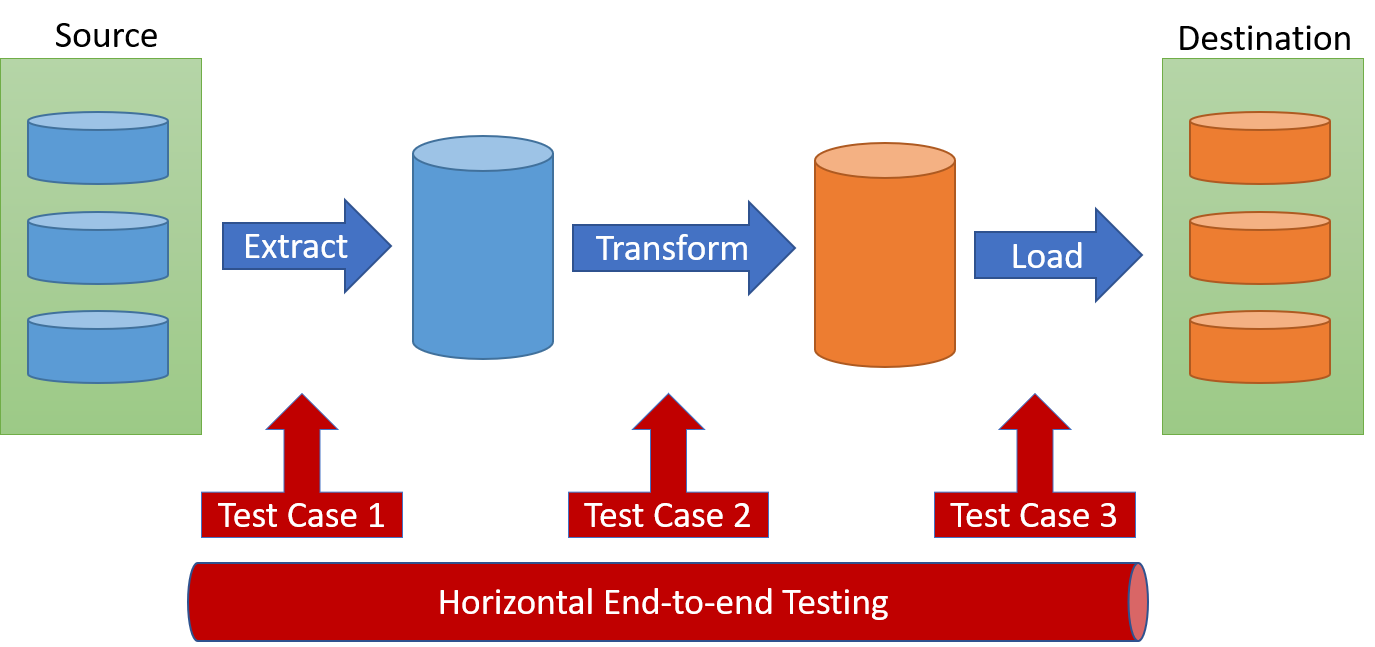
Best Practice: Use synthetic data and automate validation at each stage. Integrate E2E tests into your CI/CD pipeline (e.g., GitHub Actions, Azure Pipelines, GitLab CI).
Vertical Test
A vertical E2E test validates a critical transaction or workflow through all layers of a single application—from frontend to backend and database.
Example:
- User submits a form in a web app (frontend)
- Request passes through API gateway, middleware, and backend services
- Data is persisted in a database (e.g., PostgreSQL, DynamoDB, Cosmos DB)
- E2E test checks the end-to-end flow, including error handling and data integrity
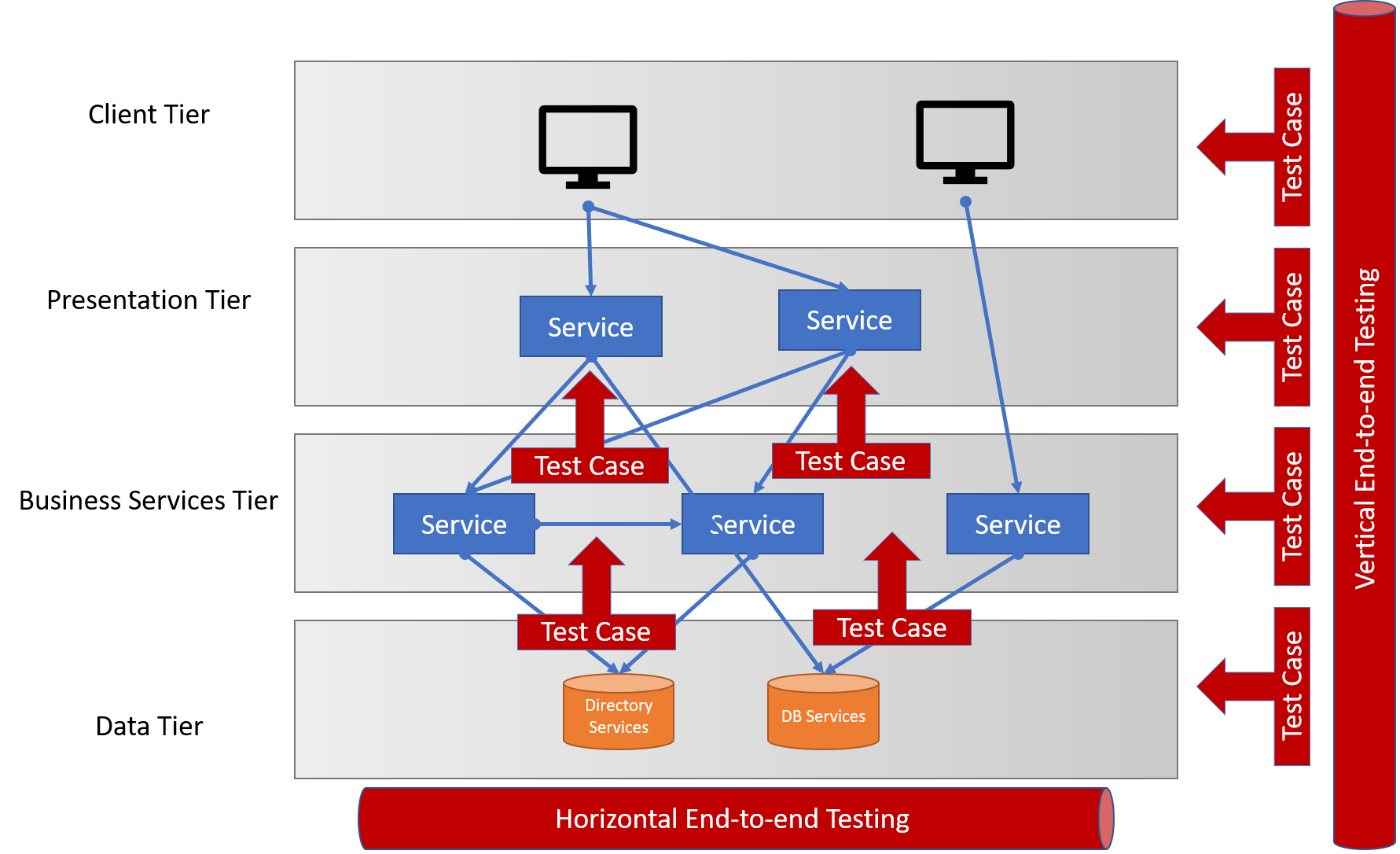
Best Practice: Automate vertical E2E tests for critical user journeys. Use tools like Selenium, Playwright, or Cypress for UI, and Postman or REST-assured for APIs.
E2E Test Case Design Guidelines
When designing E2E test cases:
- Design from the end user’s perspective (user stories, business flows)
- Focus on core features and critical paths
- Cover both positive and negative scenarios
- Use data-driven tests for multiple input variations
- Automate E2E tests in your CI/CD pipeline for every deployment
- Monitor and report E2E test results for fast feedback
Real-Life DevOps Example: E2E Test in a CI/CD Pipeline
Scenario:
- Microservices deployed on Kubernetes (AWS EKS, Azure AKS, GCP GKE)
- E2E test runs after deployment to validate the full user workflow
GitHub Actions Example:
jobs:
  e2e:
    runs-on: ubuntu-latest
    steps:
      - uses: actions/checkout@v4
      - name: Deploy to Kubernetes
        run: ./deploy.sh
      - name: Run E2E Tests
        run: npm run test:e2e
Best Practice:
- Run E2E tests on every pull request and before production releases
- Use cloud-native test environments (ephemeral environments, preview deployments)
- Integrate with monitoring and alerting for failed E2E tests
References
- Microsoft Engineering Playbook: E2E Testing
- Cypress E2E Testing
- Playwright E2E Testing
- Selenium E2E Testing
Tip: For cloud-native and microservices architectures, combine horizontal and vertical E2E tests for comprehensive coverage.
```markdown